
Table of Contents
ToggleIntroduction
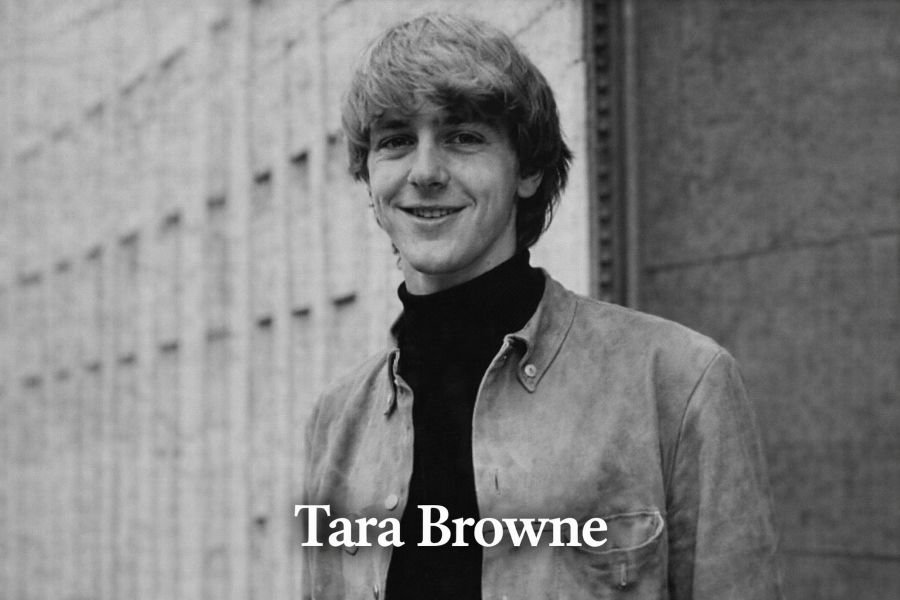
Tara Browne remains one of the most fascinating figures of the 1960s—not because of a long career or public achievements, but because of the extraordinary influence he held in a remarkably short life. Born into immense privilege and aristocracy, he moved effortlessly between elite society and the revolutionary youth culture of his era.
Despite his wealth and connections, Tara Browne’s story carries both brilliance and tragedy. His life reflects the glamour, freedom, and creative energy of the 1960s, while his untimely death highlights the fragility behind that glittering world. This article explores his life with verified facts only, presenting a complete, human, and search-optimized biography.
Quick Bio of Tara Browne
| Detail | Information |
|---|---|
| Full Name | The Honourable Tara Browne |
| Date of Birth | 4 March 1945 |
| Place of Birth | Dublin, Ireland |
| Nationality | Irish |
| Ethnicity | Anglo-Irish |
| Profession | Socialite |
| Parents | Dominick Browne, 4th Baron Oranmore and Browne; Oonagh Guinness |
| Sibling | Garech Browne |
| Spouse | Noreen “Nicky” MacSherry |
| Children | Dorian Browne, Julian Browne |
| Date of Death | 18 December 1966 |
| Age at Death | 21 years |
| Burial Place | Luggala Estate, County Wicklow, Ireland |
Early Life and Aristocratic Roots
Tara Browne was born into one of Ireland’s most prominent aristocratic families. His father, Dominick Browne, was a peer of the realm, while his mother, Oonagh Guinness, belonged to the legendary Guinness brewing dynasty. This heritage placed Tara at the intersection of political influence, wealth, and cultural prestige from birth.
Growing up between Ireland and England, Tara experienced a privileged upbringing shaped by historic estates, refined social traditions, and elite gatherings. From an early age, he was exposed to influential figures across politics, arts, and high society, which later allowed him to move seamlessly through elite and creative circles.
Education and Upbringing
Tara Browne’s upbringing reflected the standards of aristocratic families of his time. He was educated within private systems appropriate to his social standing, surrounded by peers from influential backgrounds. His education emphasized cultural awareness, social confidence, and intellectual curiosity rather than vocational ambition.
This environment contributed to his natural ease in conversation and social settings. Rather than pursuing a conventional profession, Tara developed an identity rooted in cultural participation and social leadership, which later defined his public presence.
Rise as a Socialite in 1960s London
During the early 1960s, Tara Browne emerged as a notable socialite in London, particularly within the vibrant movement later known as Swinging London. He was admired for his charisma, style, and ability to connect people from vastly different worlds.
As The Honourable Tara Browne, he bridged aristocracy and counterculture. Artists, musicians, designers, and creatives found his company engaging, while his wealth allowed him to host gatherings that became legendary within cultural circles. His role was not performative but connective—bringing together ideas, people, and movements.
Cultural Influence and Social Power
Although not a musician or artist himself, Tara Browne played a subtle yet significant role in shaping cultural dialogue. His friendships with influential creative figures positioned him at the center of cultural shifts happening across music, fashion, and youth identity.
His presence symbolized freedom, experimentation, and modernity. Tara Browne embodied a new type of socialite—one who did not simply inherit status, but used it to explore emerging cultural expressions. This duality made him admired by many and misunderstood by others.
Marriage and Personal Life
At a young age, Tara Browne married Noreen “Nicky” MacSherry. The marriage resulted in two children, Dorian and Julian Browne. Despite his responsibilities as a husband and father, Tara continued to live within high-energy social environments.
His personal life reflected contrasts: commitment and freedom, tradition and rebellion. These contrasts shaped his emotional world and contributed to the complexity of his character, often described as generous, spirited, and restless.
Wealth, Status, and Responsibility
As an heir to the Guinness family fortune, Tara Browne possessed significant financial independence. This wealth allowed him to pursue a lifestyle unconstrained by traditional employment, reinforcing his role as a cultural participant rather than a career professional.
However, privilege also brought scrutiny. His lifestyle attracted both admiration and criticism, reflecting broader societal tensions between tradition and modernity during the 1960s.
The Tragic Accident
In December 1966, Tara Browne was involved in a fatal car accident in London. He suffered severe injuries and passed away the following day at just 21 years old. His death shocked social and cultural circles across Ireland and Britain.
The tragedy marked the abrupt end of a life that seemed limitless in possibility. It also transformed Tara Browne from a living presence into a lasting symbol of an era defined by brilliance and vulnerability.
Cultural and Historical Legacy
Tara Browne’s death became immortalized in popular culture. His passing directly inspired the opening verse of the song “A Day in the Life,” cementing his name in music history. This connection elevated his legacy beyond social circles into global cultural memory.
Today, Tara Browne is remembered as more than a socialite. He represents a generation of young people who challenged boundaries, embraced creativity, and lived intensely within a rapidly changing world.
Conclusion
Tara Browne’s life was powerful yet painfully brief. As a socialite, he held influence without authority, impact without formal power, and legacy without longevity. His story carries both inspiration and caution, reminding us that cultural influence often comes from connection rather than creation.
The Honourable Tara Browne remains a symbol of 1960s transformation—a figure whose presence shaped moments, whose absence shaped memory, and whose life continues to fascinate generations.
Frequently Asked Questions (FAQ)
Who was Tara Browne?
Tara Browne was an Irish socialite and heir to the Guinness family fortune, known for his influence within 1960s cultural and social circles.
Why is Tara Browne famous?
He is widely remembered for his cultural connections and for inspiring part of a landmark song that became central to 1960s music history.
Was Tara Browne an artist or musician?
No, he was not a professional artist or musician. His influence came through social connections and cultural participation.
How did Tara Browne die?
He died from injuries sustained in a car accident in London in December 1966.
What is Tara Browne’s legacy today?
His legacy lies in his cultural impact, symbolic role in the 1960s, and lasting presence in music and social history.
