
Table of Contents
ToggleIntroduction
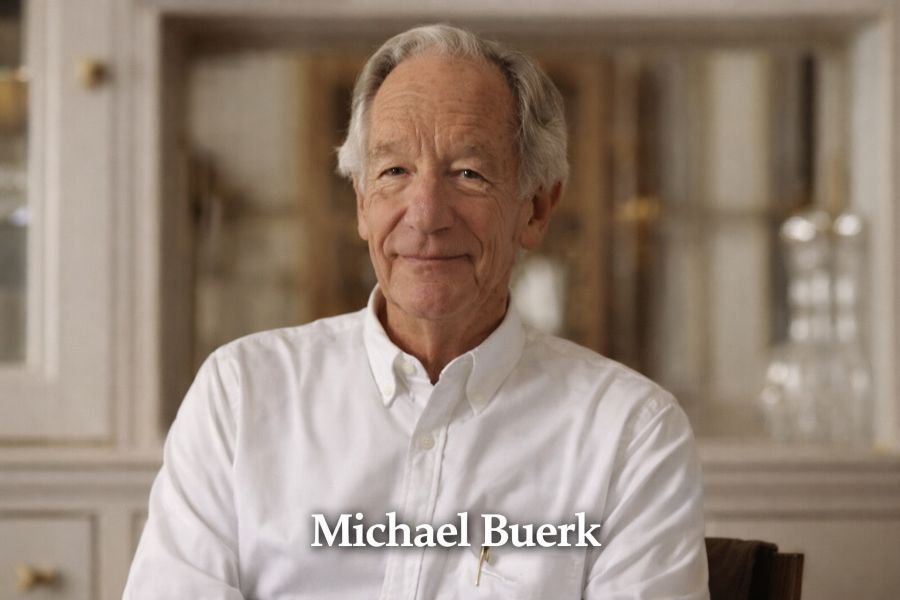
Michael Buerk is a name that commands respect, recognition, and reflection in British journalism. Known for his authoritative delivery and fearless reporting, he is widely regarded as one of the most influential British journalists of the late twentieth century. His work did not merely inform audiences; it reshaped public understanding of global crises and redefined the moral responsibility of broadcast journalism.
At the same time, his career has not been without criticism. While admired for clarity and conviction, Buerk has also faced public scrutiny for strong opinions and uncompromising views. This balance of praise and controversy has helped cement his reputation as a broadcaster who never blended into the background, but instead stood firmly at the centre of national conversation.
Quick Bio: Michael Buerk
| Field | Details |
|---|---|
| Full Name | Michael Duncan Buerk |
| Date of Birth | 18 February 1946 |
| Birthplace | Solihull, Warwickshire, England |
| Nationality | British |
| Profession | British journalist, broadcaster, presenter, author |
| Known For | BBC News, Ethiopian famine report, The Moral Maze |
| Spouse | Christine Buerk |
| Children | Two sons |
Early Life and Education
Michael Duncan Buerk was born on 18 February 1946 in Solihull, Warwickshire. His early life was shaped by change and resilience, including time spent in Canada during childhood before returning to England. These formative experiences contributed to a worldview that would later inform his international reporting.
He was educated at Solihull School, a respected independent school, where he showed early discipline and interest in public service. Buerk initially aspired to join the Royal Air Force, but this ambition did not materialise due to eyesight requirements. This turning point proved significant, redirecting him toward journalism — a field where his voice would eventually reach millions.
The Start of a Journalism Career
Michael Buerk began his professional life in print journalism, working for local newspapers such as the Bromsgrove Messenger and later the South Wales Echo. These early roles allowed him to develop essential reporting skills, including accuracy, speed, and editorial judgment.
In 1970, his career took a decisive turn when he joined BBC Radio Bristol, becoming the first voice heard on the station. This milestone marked the beginning of a lifelong association with the BBC and signalled his transition from print to broadcast journalism, where his distinctive delivery would become a defining feature.
Rise Within the BBC
By 1973, Buerk had joined BBC News as a network reporter. Over the following years, he served in several specialist correspondent roles, covering industrial affairs, energy, and Scotland. Each position strengthened his reputation as a journalist capable of handling complex subjects with clarity and authority.
His career reached a pivotal phase when he became the BBC’s Southern Africa correspondent in the early 1980s. Based in Johannesburg, he reported extensively on apartheid-era South Africa. His reporting was direct and unflinching, ultimately leading to his expulsion from the country — an episode that underscored both the risks and integrity of his work.
The Ethiopian Famine Report
In October 1984, Michael Buerk delivered what is widely considered one of the most influential news reports in British television history. His coverage of the Ethiopian famine presented the crisis in stark, human terms, confronting audiences with the scale of suffering and urgency.
The report had a profound global impact. It directly inspired major humanitarian responses, including the Band Aid charity initiative and the Live Aid concerts. This moment permanently linked Buerk’s name with the power of journalism to provoke action, while also raising enduring debates about the ethics and influence of broadcast reporting.
Becoming the Face of BBC News
Following his foreign correspondent work, Buerk became one of the BBC’s leading newsreaders. He anchored flagship programmes including the BBC Nine O’Clock News and later BBC News at Ten, bringing a calm but commanding presence to the screen.
He also presented the BBC’s first news bulletin of the new millennium on 1 January 2000, symbolising both continuity and change in British broadcasting. Although he stepped back from regular news presenting in 2002, his influence within the BBC remained strong through radio and documentary work.
Radio, Television, and Public Debate
Beyond news bulletins, Buerk expanded his career into radio and factual television. Since 1990, he has chaired The Moral Maze on BBC Radio 4, a programme known for robust debate on ethical and social issues. His firm moderation style has been praised for structure while also criticised for severity.
On television, he presented the long-running BBC series 999, bringing emergency service stories to a wide audience. These roles demonstrated his versatility as a broadcaster, capable of combining seriousness with accessibility without diluting the substance of the subject matter.
Writing and Professional Recognition
Michael Buerk documented his life and career in his autobiography The Road Taken, offering insight into the pressures and principles behind his public persona. The book reflects on journalism as both a craft and a moral responsibility.
Throughout his career, he has received numerous prestigious awards, including honours from the Royal Television Society, BAFTA, and international journalism bodies. These accolades recognise not just longevity, but lasting impact on the profession.
Personal Life and Public Image
Buerk is married to Christine Buerk and is the father of two sons. Despite a high-profile career, he has generally maintained a private family life, keeping personal matters separate from his professional identity.
Public perception of Michael Buerk is sharply defined. Supporters view him as principled, intelligent, and uncompromising. Critics argue that his tone can be severe and his opinions polarising. This tension has ensured that he remains a figure of discussion rather than consensus.
Conclusion
Michael Buerk stands as a powerful symbol of British broadcast journalism at its most influential. His career reflects both the strengths and challenges of the profession — the ability to inform, to move, and sometimes to divide opinion. Few journalists have shaped public awareness as decisively as he has.
Whether praised for courage or criticised for controversy, his legacy is undeniable. Michael Duncan Buerk did not merely report history; in key moments, he helped change it.
Frequently Asked Questions (FAQ)
Who is Michael Buerk?
Michael Buerk is a British journalist and broadcaster best known for his work with BBC News and his reporting on major international events.
Why is Michael Buerk famous?
He is especially known for his 1984 report on the Ethiopian famine and for presenting major BBC news programmes.
What programmes has Michael Buerk presented?
He has presented BBC News at Ten, BBC Nine O’Clock News, The Moral Maze, and 999, among others.
Is Michael Buerk still active in broadcasting?
Yes, he continues to be associated with radio broadcasting and public discussion, particularly through The Moral Maze.
What is Michael Buerk’s legacy?
His legacy lies in demonstrating the power of journalism to influence public awareness, humanitarian response, and ethical debate.
